
Walk into almost any café and you will hear music before you notice the menu. Many businesses play that music from a phone or laptop behind the counter using Spotify, YouTube or Apple Music. It is convenient, but it raises two questions: is it allowed? and is it really the right setup for a business?
Who are personal music apps designed for?
The terms of use of Spotify, YouTube and similar services state that they are provided for personal, non-commercial use. Playing music to customers in a shop, restaurant or hotel is not personal listening: the music is part of the business’s commercial environment and is played in a space open to the public.
In Turkey, playing music in public venues involves the rights of authors and related rights holders such as producers and performers. These rights are governed by the Law on Intellectual and Artistic Works and are largely managed through collecting societies. In short, a personal subscription does not replace the permissions needed to play music in a business.
This article is for general information only and is not legal advice. Consult a lawyer about your specific situation.
Beyond the legal side: why it does not fit a business
Permission is not the only issue. Personal apps are not built around a business’s daily needs:
- Ads and the wrong song: free tiers interrupt with ads, and recommendation algorithms can play tracks that do not suit the venue.
- Dependence on staff: someone has to start, change and stop the music. It gets forgotten at busy times and changes with every shift.
- Silence when the internet drops: streaming depends on the connection; no internet, no music.
- Inconsistency across locations: every branch plays its own playlist and the brand experience varies.
- No record: there is no log of what was played on which day.
What does the right model look like?
A service built for commercial use solves these problems from the start. HYDW in-store music offers two options:
- HYDW original music: our own catalogue produced in-house, curated by industry and time of day and constantly refreshed.
- Licensed popular music: for brands that want well-known songs, we broker the necessary agreements; in this model the licence is held by the business.
We agree on the right model during the quote stage and share the terms in writing. See Music and Licensing for details.
HYDW
We bring the music, you choose the model
HYDW original music or popular music under your own licence: in both models every track played is recorded daily in a KamuSM-timestamped report.
Why keeping a record matters
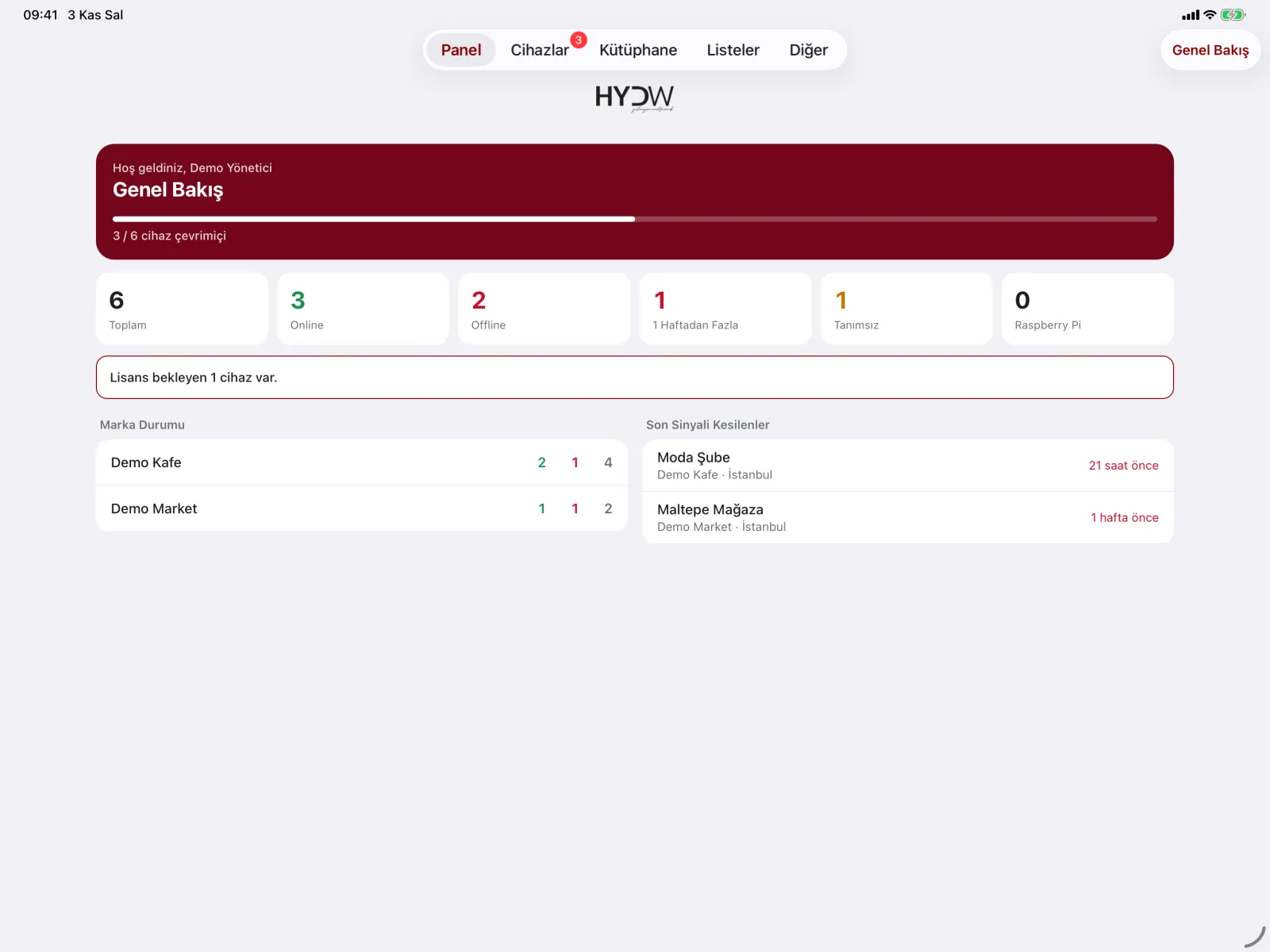
A business may want to show which music it played on a given day. Every night HYDW compiles everything each store played the previous day into a PDF report per brand, sealed with a qualified timestamp from TÜBİTAK KamuSM and archived. You can download it from the dashboard or request it from the WhatsApp assistant.
How long does switching take?
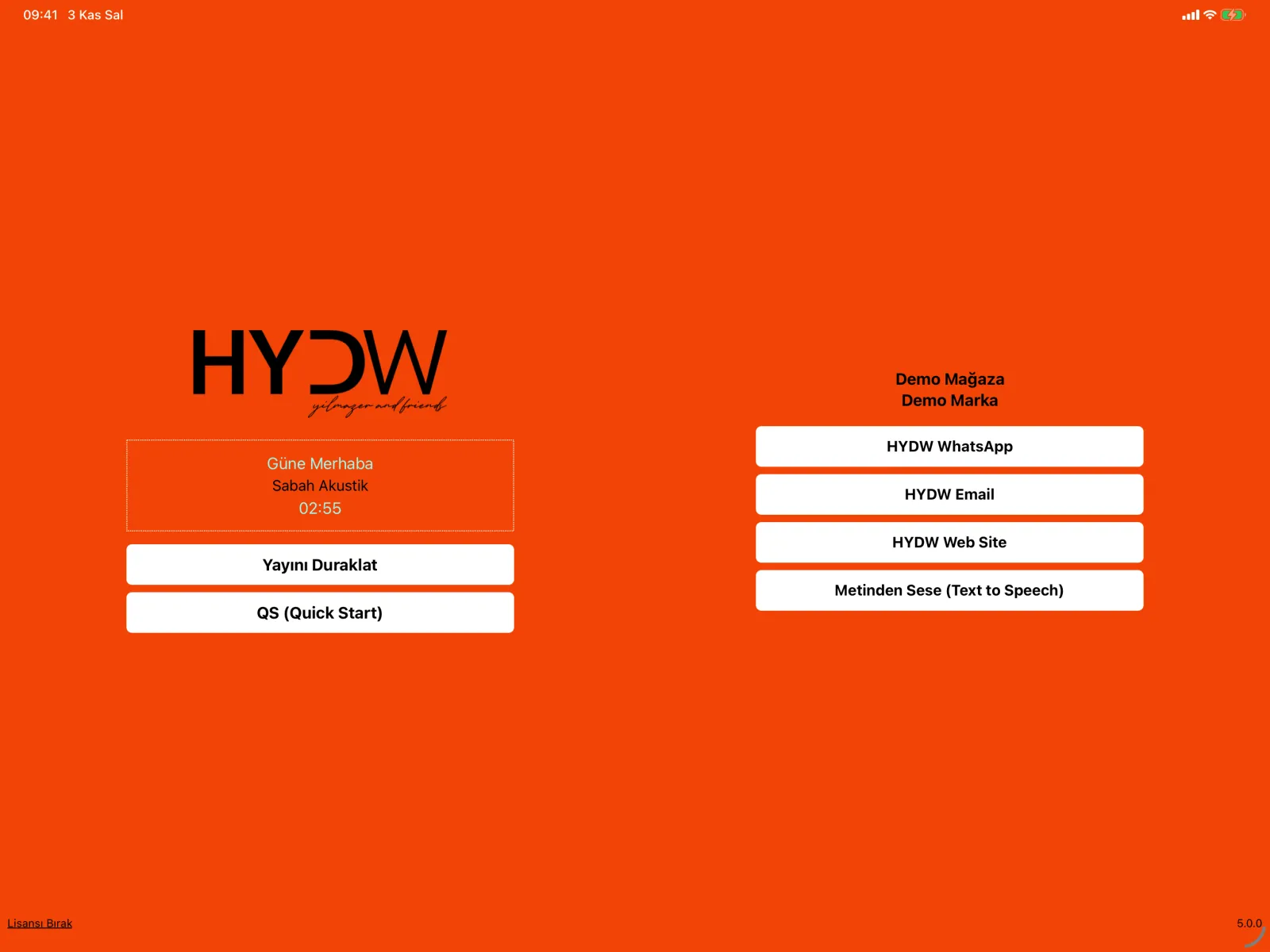
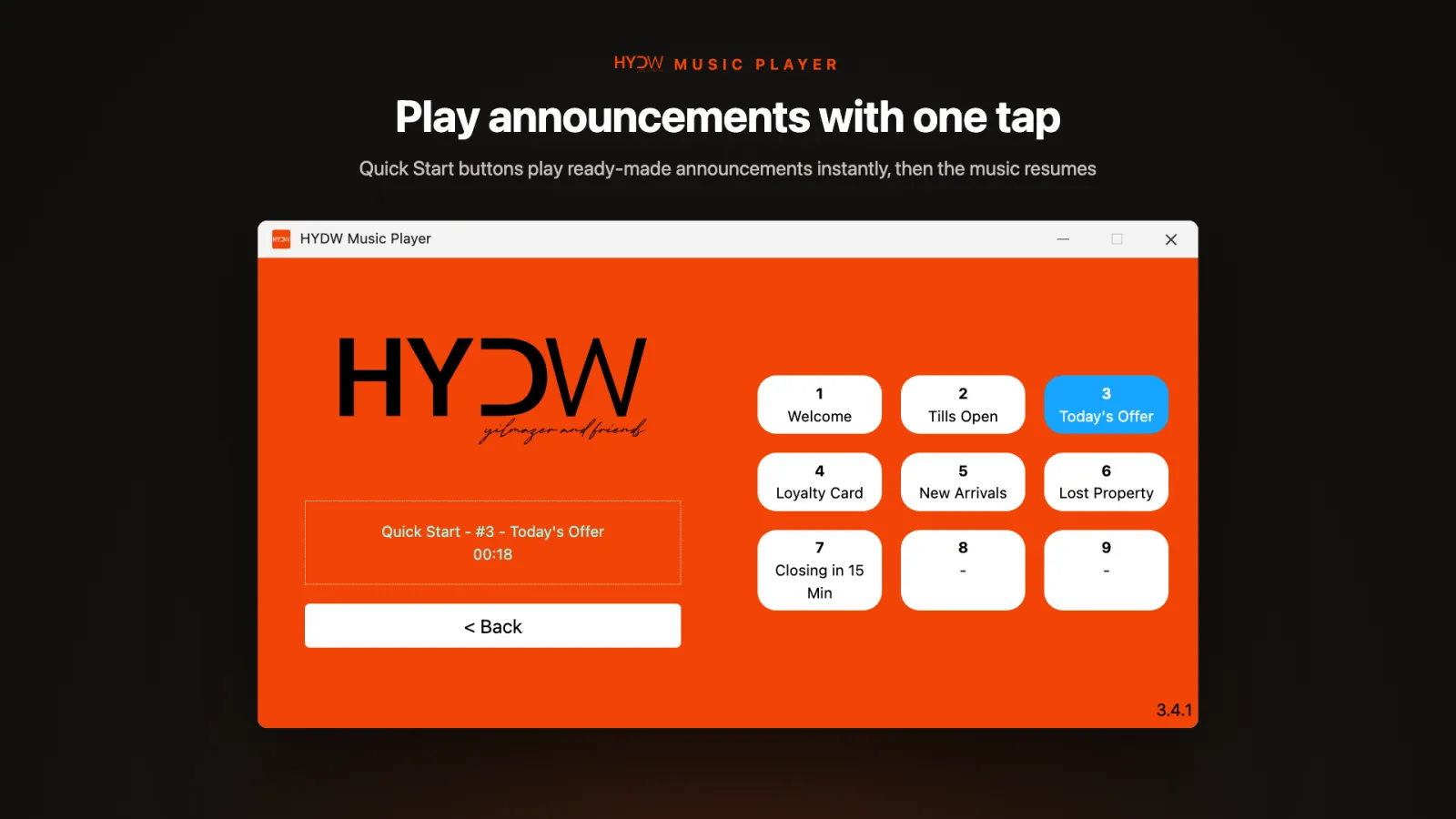
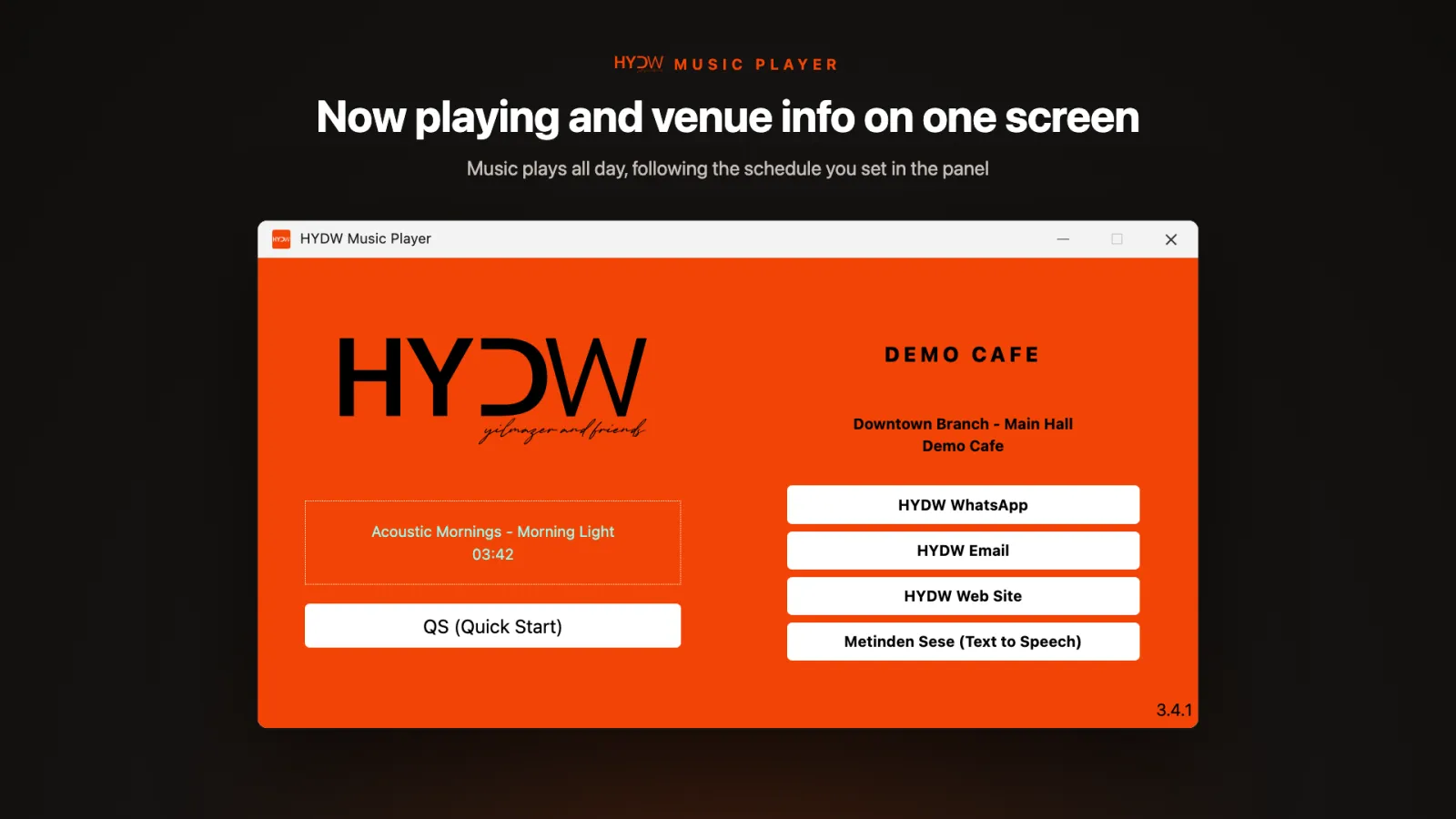
If you have no computer, the HYDW Music Box arrives fully configured: connect power, audio and ethernet and the music starts. You can also install HYDW Music Player on an existing Windows or macOS computer or a tablet. Pairing with the on-screen code takes a minute.
Frequently asked questions
Is a Spotify Premium subscription enough for a business?
Personal subscriptions, Premium included, are offered for personal, non-commercial use under their terms. Playing to customers in a business falls outside that.
Is playing music from YouTube a problem?
YouTube is also offered for personal, non-commercial use, and ads and recommendations make it hard to control the atmosphere of your venue. Choose a service designed for commercial use.
What changes when I switch to HYDW?
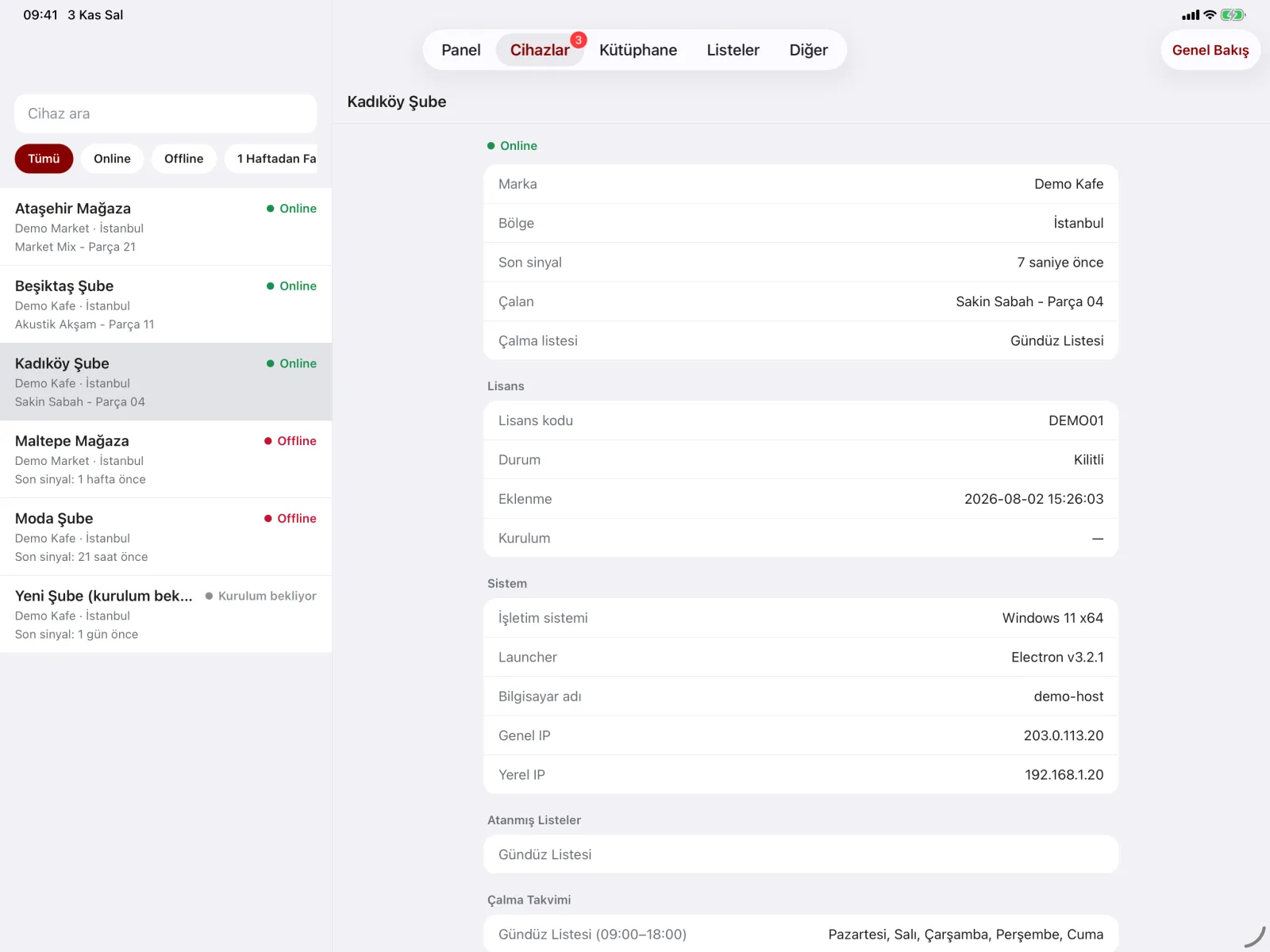
Music plays to a plan without ads, keeps playing offline, every location is managed from one dashboard and everything played is recorded in a daily report.
Try it free for 15 days in your venue
We plan your music and announcements together, connect your device, and you use HYDW free for 15 days in real conditions.